

By Annette J Beveridge
I spend much of my time researching British wildlife as there is so much we need to do to protect it. But wildlife the world over, faces many risks to survival, so I thought it was time to also create the Wildlife From Afar series.
There are so many incredible species to explore, so let’s dive in.
Question: What do you get if you merge a lizard, a small dinosaur and a pinecone?
Answer: A rather strange-looking, highly distinctive animal native to Australia and one that apparently, has a romantic flair.
Introducing the shingleback lizard
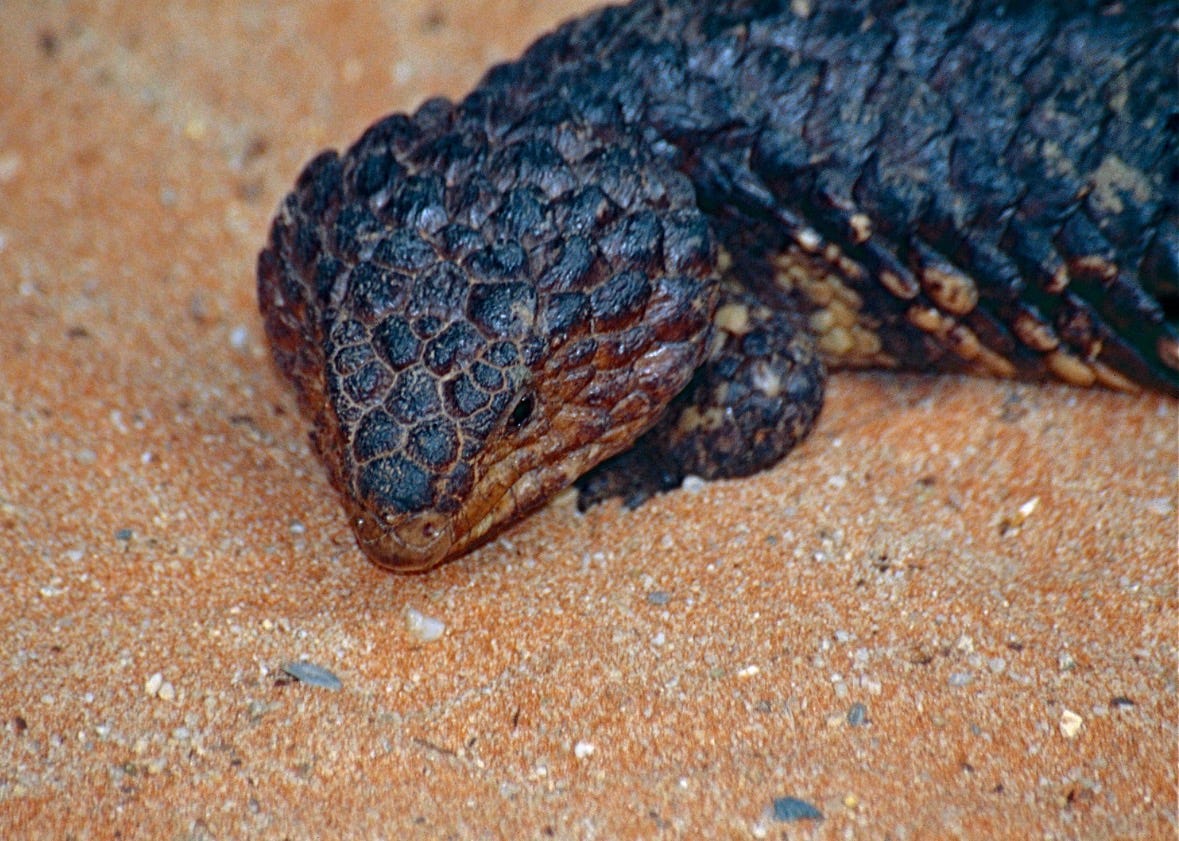
The shingleback lizard has a triangular head, rough overlapping scales, a chunky body, and a short blunt tail; plus, it has a few defence tricks up its sleeve if attacked.
It may not be beautiful, but this lizard is distinctive, and the tail is one of its strangest features, because it looks like a second head. This is a defence mechanism designed to confuse a would-be predator.
When defence becomes attack
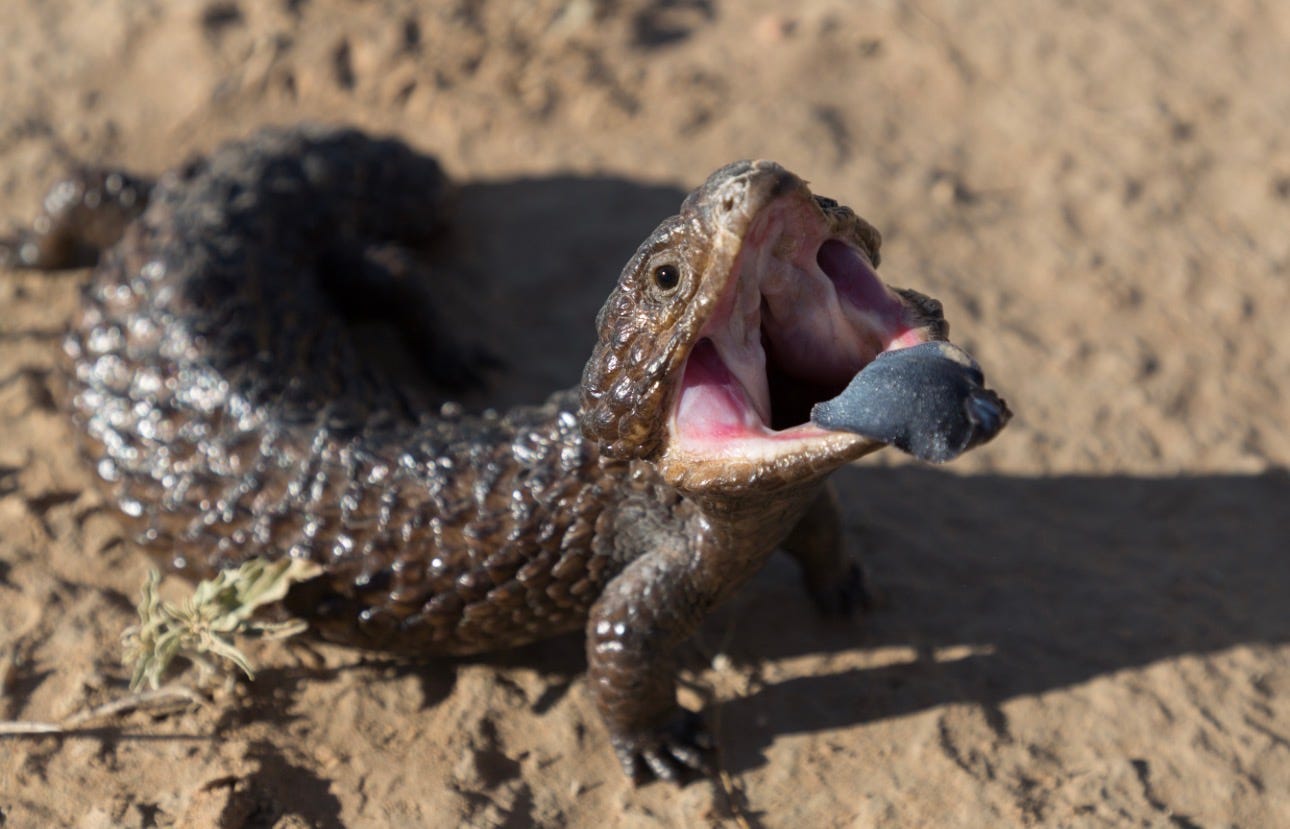
If it feels threatened, the shingleback lizard does not retreat; instead, it turns directly towards the attacker, opens its large mouth and sticks out a brilliant blue tongue. This might not seem like much of a defence, but it acts as a warning and is in stark contrast to the pink inner of its mouth.
If the threat continues, the lizard can flatten its body so it appears larger and is more than capable of giving a nasty bite although it is not venomous.
Although slow-moving, its jaws and teeth are strong, and capable of crushing hard-bodied prey such as snails and beetles. Omnivores, plant material makes up most of the diet, but the lizards will take fruit, insects, beetles and anything that is slow-moving.
The shingleback lizard is known by many names: bobtail, sleepy lizard, stumpy-tailed lizard and pinecone lizard, all of which make perfect sense.
Read more: Get to know the starlings in your garden
The lizards are found across much of southern Australia, including semi-arid inland areas and parts of Western and South Australia and spend much of the time on the ground, finding cover in grass and leaf litter. They also use rocks and logs for shelter, emerging to bask in the sunshine.
Like all reptiles, shinglebacks are ectothermic. This means they do not produce energy to keep them warm, but rely on their surroundings. When active, they generally maintain a body temperature of around 30–35°C.
A warm start to the day is extremely important for these lizards, because they rely on warmth for movement and digestion.
Breeding
These lizards tend to spend much of the year alone, but in spring, males and females come together. Males will often be seen following a female through the landscape during September through to November. There is a common ‘mate fidelity ’, which means the same individuals come together year after year.
Shinglebacks bear live young. The developing embryos are carried inside the female’s reproductive tract and receive nutrients through a highly developed placenta-like structure.
Read more: Introducing Britain’s second venomous snake
After a gestation of roughly three to five months, two or three live young are born. The babies are large, measuring up to 22cm and can weigh as much as 200 grams at birth.
From that moment on, they have to defend themselves.
Watch a shingleback lizard walk, and you would be forgiven for thinking it is rather comical with its chunky body and short legs, but they are well-adapted to their environment.
These are long-living lizards. Lifespan is up to 30 years. One major risk to their survival is their reputation for being ‘romantic’, just because they tend to keep their mate.
The exotic pet trade
This view, sadly, has made them desirable to the exotic pet trade. Work at the Australian Museum has identified shingleback DNA and so can determine the geographical lineage of confiscated animals. The work was specifically intended to assist investigations into illegally trafficked shinglebacks.
Researchers have also investigated the animals’ chemical scent profiles, with different dietary, genetic and environmental factors influencing the volatile compounds produced by an animal. This also helps to identify those reptiles that have been illegally traded.
This unusual prehistoric-looking lizard, with its armour-like scales, blue tongue, duplicate head-looking tail, and slow, energy-efficient way of life, is perfectly adapted to its harsh Australian environment - but the biggest risk to their survival is likely to be us and the illegal pet trade.
Image One:Bernard Dupont/Image Two: Kasia-aus

What an amazing little thing!